217,872 views
4,380 likes
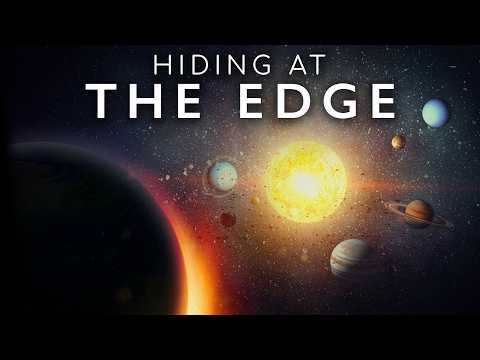
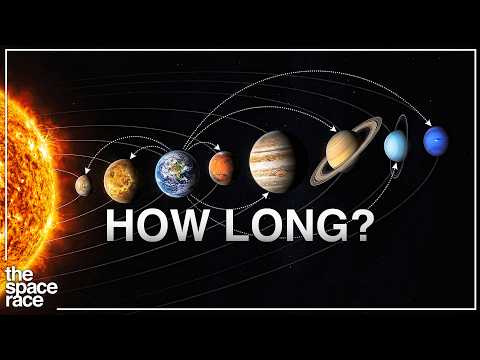
What is actually above the Solar System, and why is flying straight up from the planetary plane harder than reaching Pluto? This space documentary explores orbital mechanics, delta-v, gravity assists, the ecliptic plane, the heliosphere, heliopause, Oort Cloud, Scholz’s Star, Local Interstellar Cloud, Local Bubble, ancient supernova explosions, iron-60 on Earth, the Sagittarius Stream, Fermi Bubbles, the Milky Way’s dark matter halo, and the true structure of our cosmic neighborhood. We also examine NASA and ESA missions including Voyager 2, Ulysses, and Solar Orbiter, explain why humanity still has no real top-down photograph of the entire Solar System, and reveal why there is no universal “up” in space. This video is for viewers interested in astronomy, astrophysics, space exploration, NASA missions, the Milky Way, the Solar System, and scientifically accurate explanations of how the Universe really works.
Sources and scientific references:
Heliosphere shape: Opher et al. (2020), A small and round heliosphere suggested by magnetohydrodynamic modelling of pick-up ions: https://doi.org/10.1038/s41550-020-1036-0
Oort Cloud and long-period comets: Oort (1950), The structure of the cloud of comets surrounding the Solar System and a hypothesis concerning its origin: https://articles.adsabs.harvard.edu/pdf/1950BAN....11...91O
Local Bubble and nearby supernovae: Zucker et al. (2022), Star formation near the Sun is driven by expansion of the Local Bubble: https://arxiv.org/abs/2201.05124
Iron-60 evidence of nearby supernovae: Wallner et al. (2016), Recent near-Earth supernovae probed by global deposition of interstellar radioactive 60Fe: https://doi.org/10.1038/nature17196
Fermi Bubbles and activity in the Galactic Center: Su, Slatyer & Finkbeiner (2010), Giant Gamma-ray Bubbles from Fermi-LAT: Active Galactic Nucleus Activity or Bipolar Galactic Wind? https://arxiv.org/abs/1005.5480