1,853 views
80 likes
The complete science-based system to understand cellular repair and put it to work, in plain English, with a week-by-week plan you can start Monday. Instant PDF download.
👉 https://www.yourbodysecrets.com
Includes bonus guides: a doctor-conversation card, an egg-free/fish-free fast-breaking guide, and a printable fridge sheet.
💊 RECOMMENDED SUPPLEMENTS — DoNotAge (Official Partner)
Optional, not required. Code BODYSECRETS10 for a discount on NMN, Spermidine, Magnesium and more.
👉 https://bit.ly/YourBodySecrets
─────────────────────────────
"I'm just not a breakfast person." You've said it. You've heard it. But it's not an explanation, it's a description. And the biology behind it is far more specific, and far more revealing, than most people realise.
There are seven distinct biological mechanisms that can cause the absence of morning hunger. Some of them are signatures of exceptional metabolic health. Others are quiet warning signs that deserve your attention. The problem is, they all look identical from the outside.
In this deep dive, we break down each mechanism — the hormones, the neural circuits, the gut biology, and the metabolic states — so you can identify which one is actually driving your morning appetite pattern, and what it's telling you about the state of your health.
What this video covers:
— Mechanism 1: Metabolic Flexibility — when your body has switched to fat-burning overnight, ketone bodies blunt ghrelin signalling. This is the mechanism behind many people thriving on intermittent fasting.
— Mechanism 2: Residual Satiety Hormones — how CCK and PYY from a high-protein, high-fat dinner can suppress morning appetite through delayed gastric emptying, hours after your last meal
— Mechanism 3: Vagal Tone — why calm, parasympathetically-dominant individuals experience gentler motilin-driven hunger contractions in the first hour after waking (and what HRV has to do with it)
— Mechanism 4: The Cortisol Awakening Response — a well-regulated CAR creates a natural appetite buffer in the first 30-60 minutes post-waking. This is morning cortisol working correctly.
— Mechanism 5: Chronic Stress Suppression — the dysfunctional version: elevated adrenaline and a flattened cortisol curve that kills appetite for all the wrong reasons
— Mechanism 6: The Leptin Paradox — two completely opposite metabolic states (lean and healthy vs. leptin-resistant) that produce the exact same morning symptom
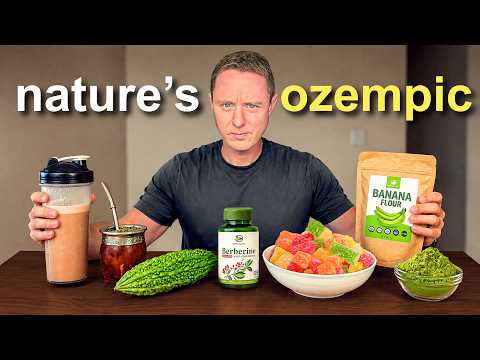
— Mechanism 7: Your Natural GLP-1 Pathway — how a diverse gut microbiome fermenting dietary fibre produces short-chain fatty acids that stimulate endogenous GLP-1 production. The same mechanism Ozempic mimics — running entirely on its own.
This video does not tell you whether to eat breakfast or skip it. It tells you why your biology is doing what it's doing — so you can make an informed decision rather than a guess.
Whether you're deep into intermittent fasting, investigating metabolic flexibility, noticing changes in your morning cortisol response, or simply trying to understand why your hunger signals feel different from everyone else's — this is the biology they never explain.
📚 REFERENCES
Stubbs BJ et al. (2019). "A Ketone Ester Drink Lowers Human Ghrelin and Appetite." Obesity, 27(3), 537–541.
Leidy HJ et al. (2011). "Higher protein intake preserves lean mass and satiety with weight loss in pre-obese and obese women." Obesity, 19, 818–824.
Breit S et al. (2018). "Vagus Nerve as Modulator of the Brain–Gut Axis in Psychiatric and Inflammatory Disorders." Frontiers in Psychiatry, 9:44.
Clow A et al. (2004). "The awakening cortisol response: methodological issues and significance." Stress, 7(1), 29–37.
Wust S et al. (2000). "The cortisol awakening response — normal values and confounds." Noise and Health, 2(7), 79–88.
Peters RW et al. (1996). "Monday peak in the incidence of ventricular tachyarrhythmias." Annals of Internal Medicine, 125(9), 712–719.
Tolhurst G et al. (2012). "Short-chain fatty acids stimulate glucagon-like peptide-1 secretion via the G-protein–coupled receptor FFAR2." Diabetes, 61(2), 364–371.
Deehan EC et al. (2020). "Precision microbiome modulation with discrete dietary fibre structures directs short-chain fatty acid production." Cell Host & Microbe, 27(3), 389–404.
Wastyk HC et al. (2021). "Gut-microbiota-targeted diets modulate human immune status." Cell, 184(16), 4137–4153. [Stanford fermented food vs. high-fibre diet study]
─────────────────────────────
⚠️ Medical Disclaimer: This video is for educational and informational purposes only and does not constitute medical advice. Always consult a qualified healthcare provider before making changes to your diet, fasting protocol, or health routine.